
Uzbek ceramics in the restaurant business: how Uzbek pottery enhances the atmosphere
An ordinary breakfast is simple: eggs, coffee, and a little bread. Yet in a restaurant

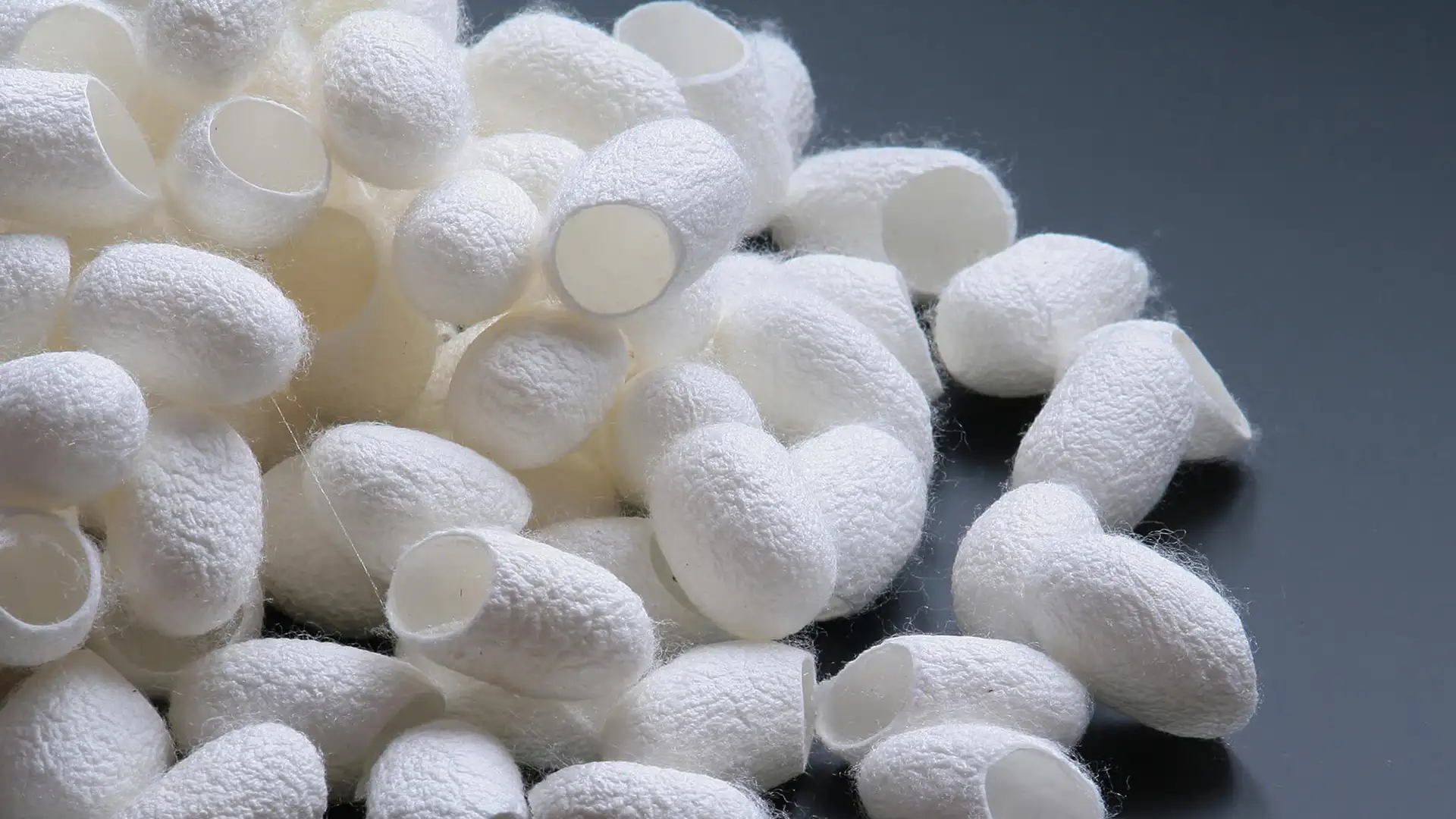
Silk is not merely a fabric but a true art reflecting Uzbekistan’s rich history and culture. It has always occupied a special place in the country as a symbol of refinement, luxury and skill. In this article, we explain how silk cloth is created, from a tiny cocoon to magnificent lengths of fabric used in traditional Uzbek clothing.
Silk production begins with raising silkworms. The small caterpillars feed on the leaves of mulberry trees traditionally grown in areas where sericulture is an important part of the culture. As the caterpillars mature, they spin cocoons made from extremely fine silk filaments.
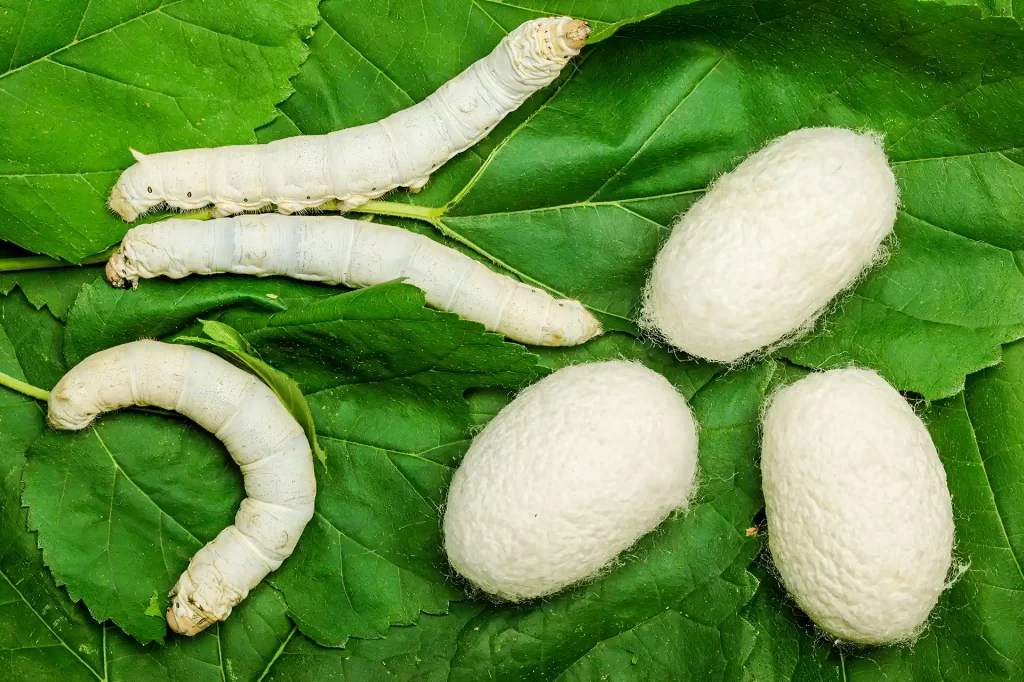
Silk cocoons are collected by hand in a demanding process requiring great attention. A single cocoon may contain as much as a kilometre of filament, and these cocoons are the starting point for the luxurious fabrics known around the world.
After collection, cocoons are processed. They are placed in hot water to soften their structure and make the filament easier to unwind. This stage is called cocoon reeling. It requires great skill and patience because the thread must remain undamaged and as continuous as possible.
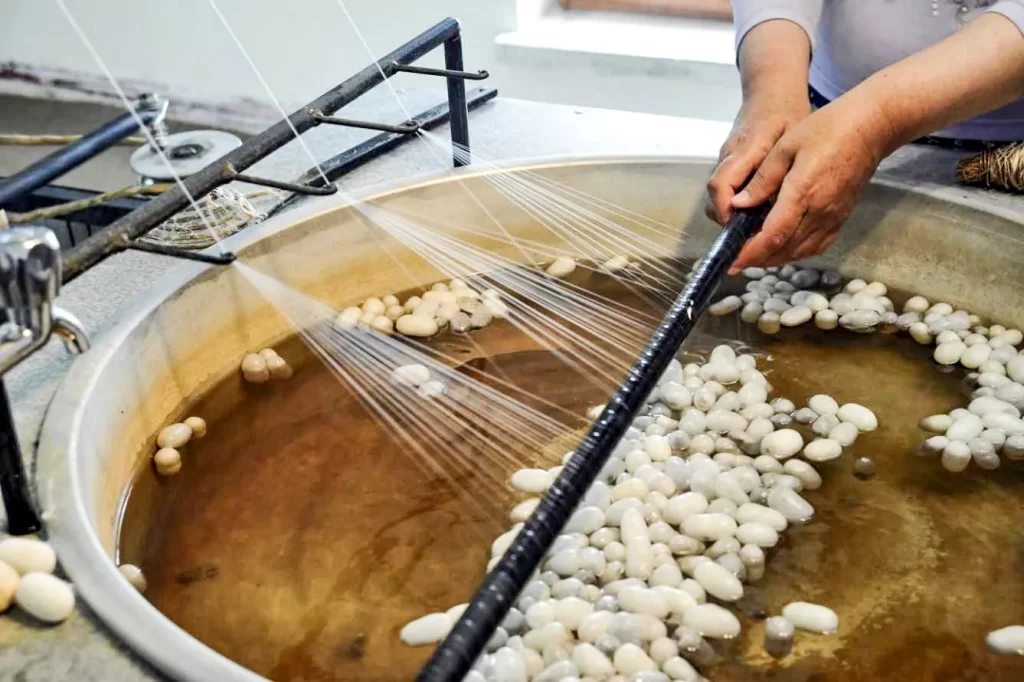
The unwound filaments are gathered and twisted into stronger, thicker threads suitable for weaving. These become the basis for further silk production.
Once silk threads have been obtained, they are dyed. Uzbekistan traditionally used natural pigments from plants, minerals, and even insects. Dyeing silk is an art requiring deep knowledge of proportions and colour combinations.
Traditional Uzbek patterns such as ikat are created by dyeing silk threads before they are woven. This process makes every length of cloth unique because no two patterns can be exactly alike. Vivid colours and intricate ornaments are defining features of Uzbek silk and its unmistakable design.
Weaving is the next important stage in silk production. Using hand looms, weavers interlace warp and weft threads to create dense cloth. Traditional Uzbek weavers often work on wooden looms passed from generation to generation as part of the cultural heritage.
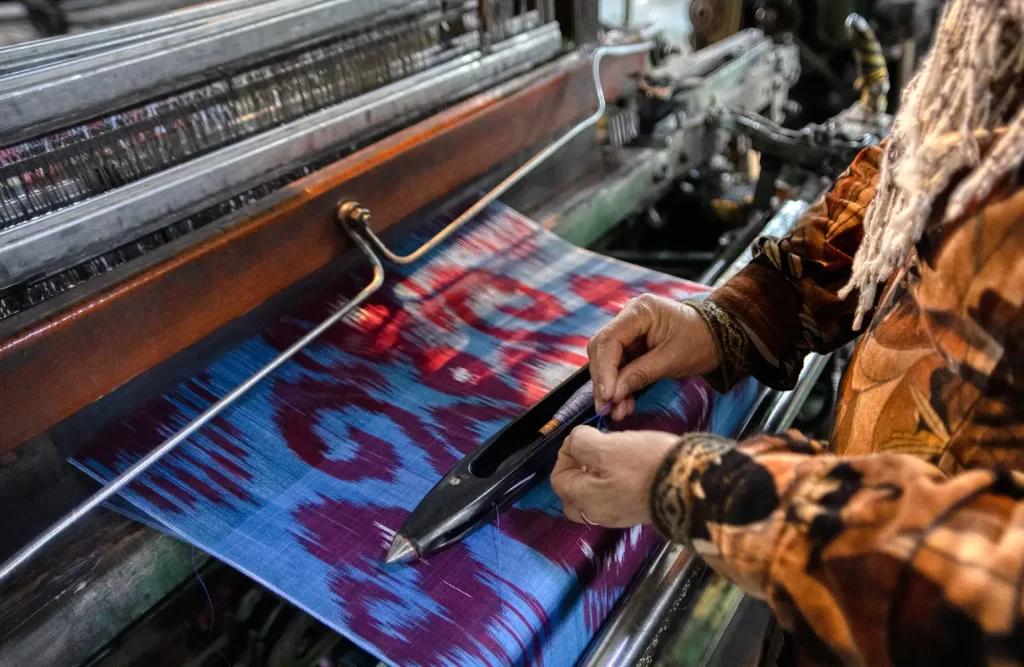
Weaving may take several weeks, depending on pattern complexity and fabric size. Every metre of cloth represents demanding labour and mastery and embodies the wealth of Uzbek tradition and culture.
Silk fabric has always held a special place in Uzbek culture. It was used to make national dress, including atlas robes and gowns worn both in daily life and on holidays. Silk also represented status and wealth because its production required a great deal of time and labour.
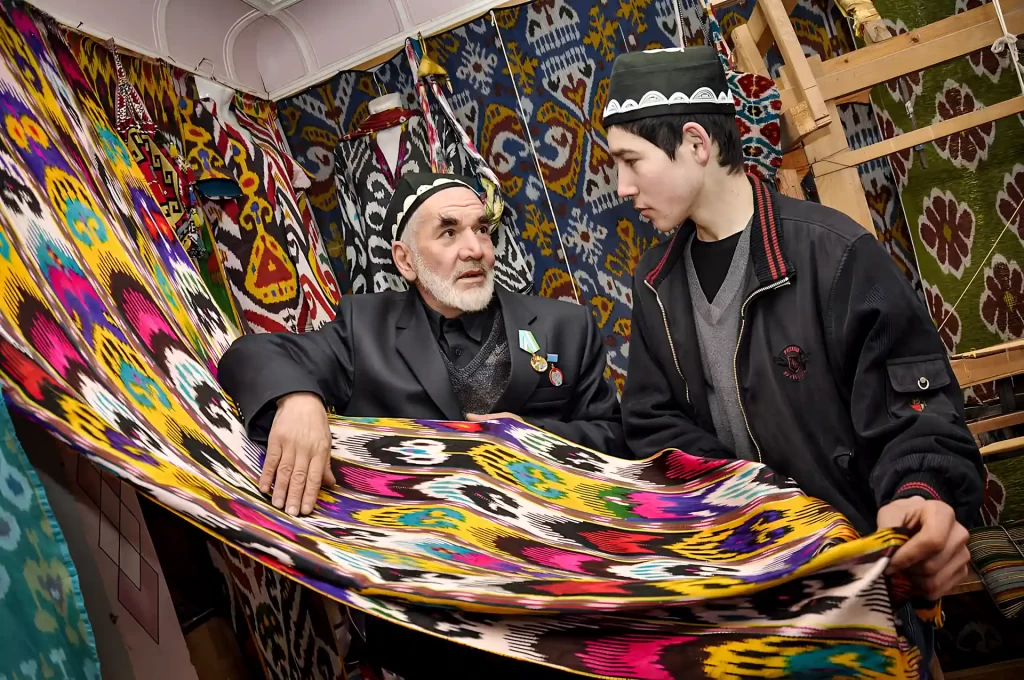
Silk continues to play an important role in modern Uzbekistan. Masters create distinctive pieces popular with local residents and foreign visitors alike. Silk fabrics are used for clothing, accessories, and interior decoration.
Creating silk fabric is a long and demanding journey that begins with a small cocoon and ends in magnificent cloth. Passed from generation to generation, the art symbolises the labour, skill, and love of beauty characteristic of the Uzbek people.
When you buy silk fabrics on SilkGranat, you become part of this rich tradition and connect with the history and culture of Uzbekistan. Learn more about other handcrafted pieces, such as suzani embroidery and fabrics, to experience the full diversity of Uzbek art.
An ordinary breakfast is simple: eggs, coffee, and a little bread. Yet in a restaurant
Anyone who thinks antiques belong only in museums or private collections is mistaken. Uzbek antiques

How often has flatbread decided the fate of your lunch? In an age of fast

A costly mistake: how not to care for handmade items. Have you ever noticed how