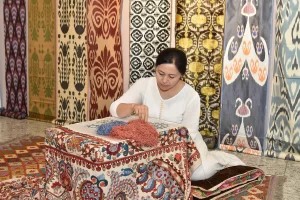
Traditional suzani embroidery: symbols and their meanings
Traditional suzani embroidery is more than a beautiful textile. It carries a profound history through

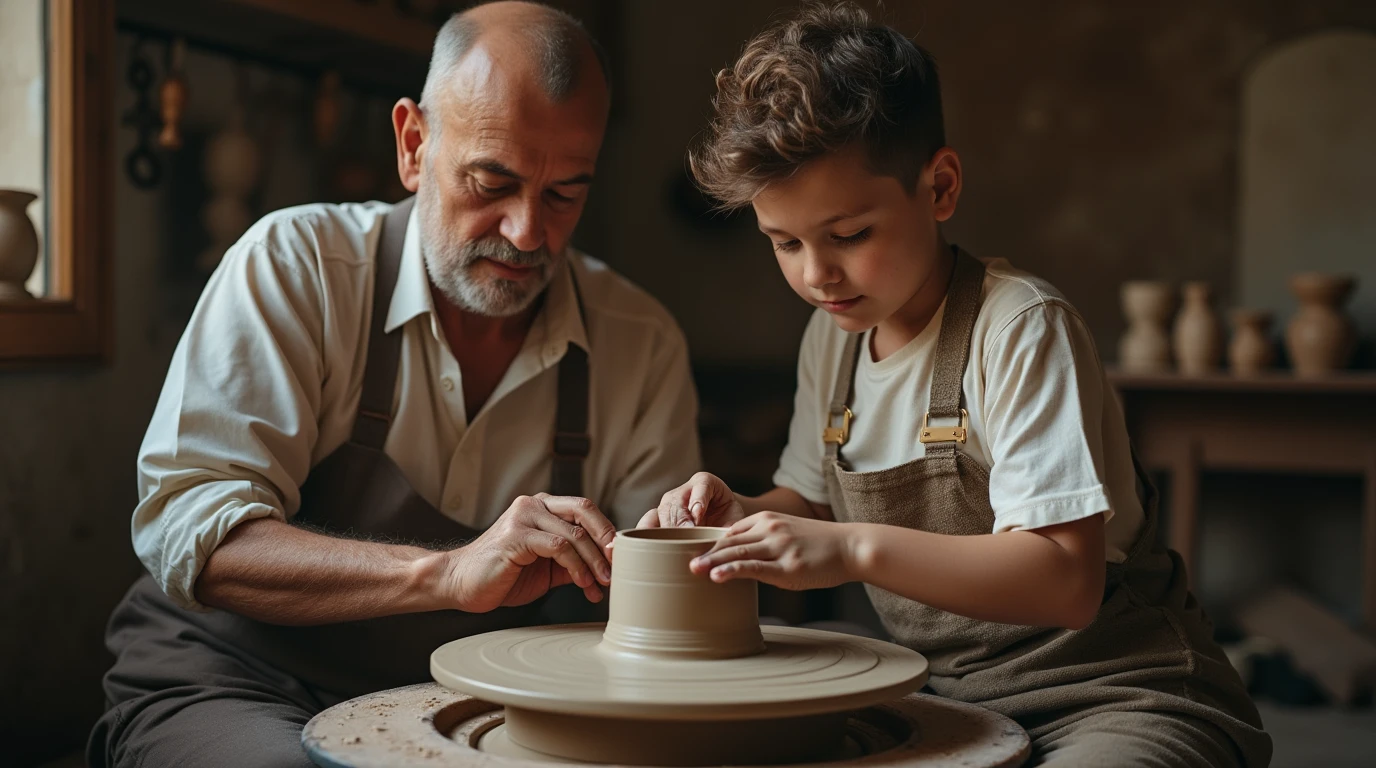
“Ordinary daily life: a minibus, traffic jams, worries, and the neighbour who always starts drilling just when you decide to rest. In the middle of this familiar routine, we sometimes remember that people once lived more simply and made the objects around them by hand. We no longer live that way, but knowing how to make something useful and beautiful has not lost its value—especially when the skill passes from master to pupil and from one generation to the next.”
Uzbek craft traditions are rooted in the distant past, and many survive through teaching. Today, the country has numerous schools and workshops where the arts of embroidery, woodwork and ceramics pass from one pair of hands to another. Do not imagine that this is dull or archaic. Entering the world of craft is like embarking on an adventure full of unexpected discoveries and vivid impressions.
Let us begin with the basics. Would you like to make something by hand but do not know where to start? Uzbekistan has several craft schools offering courses for many levels of experience.

Traditional Uzbek crafts are not only beautiful; they also preserve unique cultural codes. Every object, whether a ceramic plate or an embroidered suzani, tells us about its era, its people, their worldview, and their values. Traditional crafts were an important part of our ancestors’ lives and brought people together as they created objects that were both useful and beautiful.
Contemporary masters continue this tradition and preserve skills found nowhere else in the world. The knife-making technique of Chust, for example, is distinguished by precision, careful execution, and the unmistakable patterns seen on Chust blades. Learn more.
Learning a craft is more than receiving a technique; it should inspire the student. Masters show how to feel the material and understand its character and limits. True masters teach practical skill while revealing the beauty and strength of traditional knowledge.
A craft is more than a skill; it is a special path. The learner must not merely copy a master but learn to feel the material and understand its possibilities and limits. True masters teach technique while also inspiring pupils and revealing the beauty and power of traditional knowledge.

Correct care is essential if traditional Uzbek handicrafts are to last. Follow these recommendations.
International festivals of folk and applied arts are held annually in Uzbekistan, including Silk and Spices in Bukhara and Atlas Bayrami in Margilan. Usually taking place in May and September, these events promote Uzbek crafts and provide a platform where new artisans learn through practical contact with experienced artists. Festival visitors can view the masters’ work and also try various craft techniques themselves.
Demand for traditional handicrafts has grown significantly in recent years. People are seeking natural materials and authenticity. Craft has become a counterweight to globalisation and uniform mass-produced goods.
Uzbek handicrafts are also becoming increasingly popular with tourists. Many travellers prefer to take home something genuine, made by an artisan, rather than a mass-produced souvenir. This supports makers and helps preserve unique techniques, including those used for traditional Uzbek bags. You can view such products in our shop. in our shop.
Imagine that every object you hold is not merely a thing but a genuine artefact steeped in history and culture. The knife you use in the kitchen was forged by a craftsperson who put heart and soul into it. The suzani decorating your wall was embroidered by a woman who knows the secrets of her ancestors. These objects resemble magical artefacts linked to ancient times yet continuing to live in the modern world.
Do not miss the opportunity to become part of this story, support artisans, and bring into your life some of the warmth and wonder offered by Uzbekistan’s traditional products. These are not merely objects but history, art, and culture passed from one generation to the next.
Traditional suzani embroidery is more than a beautiful textile. It carries a profound history through
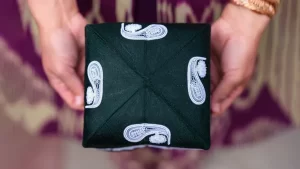
Uzbek embroidery is not merely decoration but a complete language filled with symbols and profound

A costly mistake: how not to care for handmade items. Have you ever noticed how
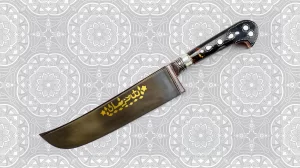
The Chust knife, also called a pichak, pichok, or pchak, is not only beautiful but