This little cap seems to have reached us from the depths of time. It is said that Islam influenced the custom of wearing a tubeteika by discouraging adult Muslims from leaving home with an uncovered head. The cap was convenient: unfold it and place it on the head, fold it and tuck it into a sash.
Beyond its practical purpose, the tubeteika has always decorated the costume. Women’s pursuit of beauty and perfection elevated their work from craft to art.
Historically, the tubeteika developed from a pointed cap worn beneath a turban. The Russian word tubeteika came from the Tatar tübätä, derived from tübe, meaning top or summit. In Uzbek, these caps are called doppi or qalpoq. By the nineteenth century, the tubeteika had become widespread, and many forms had developed: pointed, conical, hemispherical, four-sided, round and domed—every shape suggested by local custom and the imagination of the craftswoman. The wealth and variety of colours, ornaments and embroidery techniques are so great that any complete list of tubeteika decoration would be difficult.
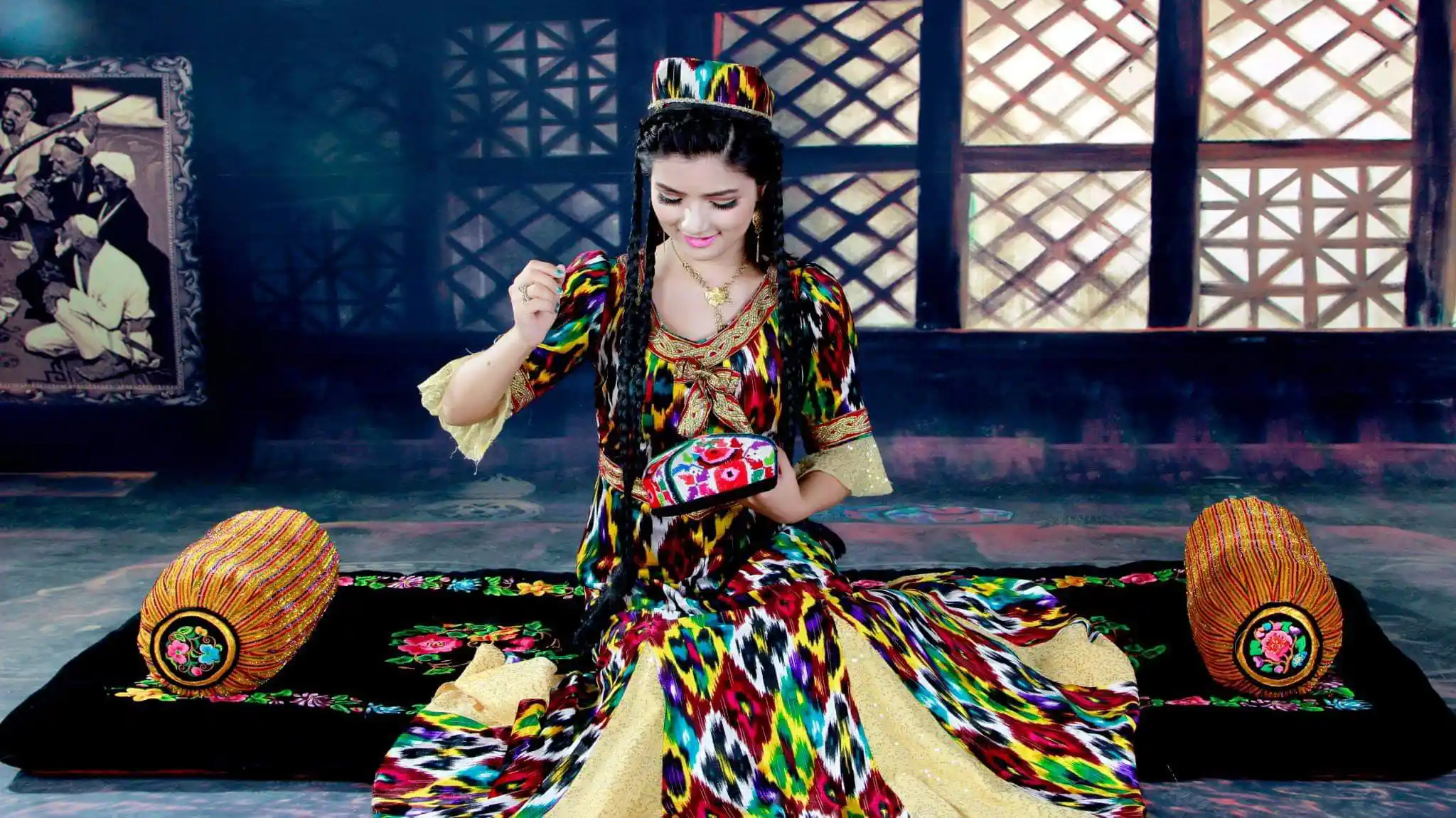
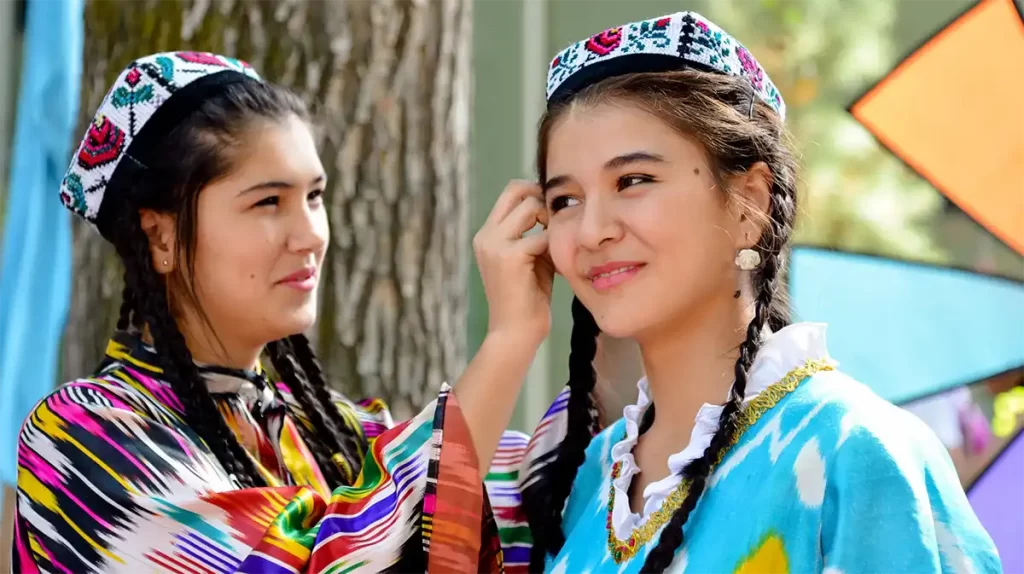
Black satin or velvet was most often chosen for men’s tubeteikas. Women’s caps are made from silk, velvet, or brocade. They may have a high or low rim, be edged with plain or multicoloured fabric, and be embroidered with silk, beads, gold thread, bugle beads, or metal details.
The variety of tubeteika shapes and textures is remarkable. There are caps for men and women, children and elders. To an unfamiliar eye, the differences may seem minor, but a connoisseur immediately recognises the intended wearer and would never put on a headdress belonging to another category.
The most widespread men’s Chust tubeteika from the Fergana Valley has a strict, modest yet highly decorative appearance. It is characterised by a strong contrast between the black background and a white pattern of four kalampir pepper pods. According to tradition, four flowers on the top protect a man’s health from all four directions. Sixteen patterned arches arranged along the edge express the wish for a large, close family with sixteen children. Traditionally, no man would enter a mosque or attend a wedding or funeral without such a cap.
The caps differ according to their place of origin. Including the men’s Chust tubeteika of the Fergana Valley, there are six historically established regional groups: Tashkent, Samarkand, Bukhara, Kashkadarya, Surkhandarya and Khorezm. Each area developed its own style, passed from mother to daughter through the generations. Every craftswoman enriches traditional ornamental motifs with her own imagination. The ornament of embroidered works developed gradually, from ritual magical patterns to poetic images, and is distinguished by varied forms and a high degree of stylisation.
The craftswomen’s works are rich in folk symbolism. Most compositions feature bushes covered with flowers, circles, rosettes, flower heads on slender stems and leafy shoots. Images of brightly feathered animals and birds are sometimes woven into the plant patterns. As a rule, the artists depicted plants believed in folk tradition to possess healing power. Tubeteika, or doppi caps, are embroidered in silk satin stitch, small iroqi cross-stitches, a special basma stitch and beads. Experienced craftswomen often work without a preliminary drawing, composing the pattern directly as they embroider.