
Green tea in Uzbek culture: an impressive history
Think for a moment: moment: is it not remarkable that one of the most ordinary

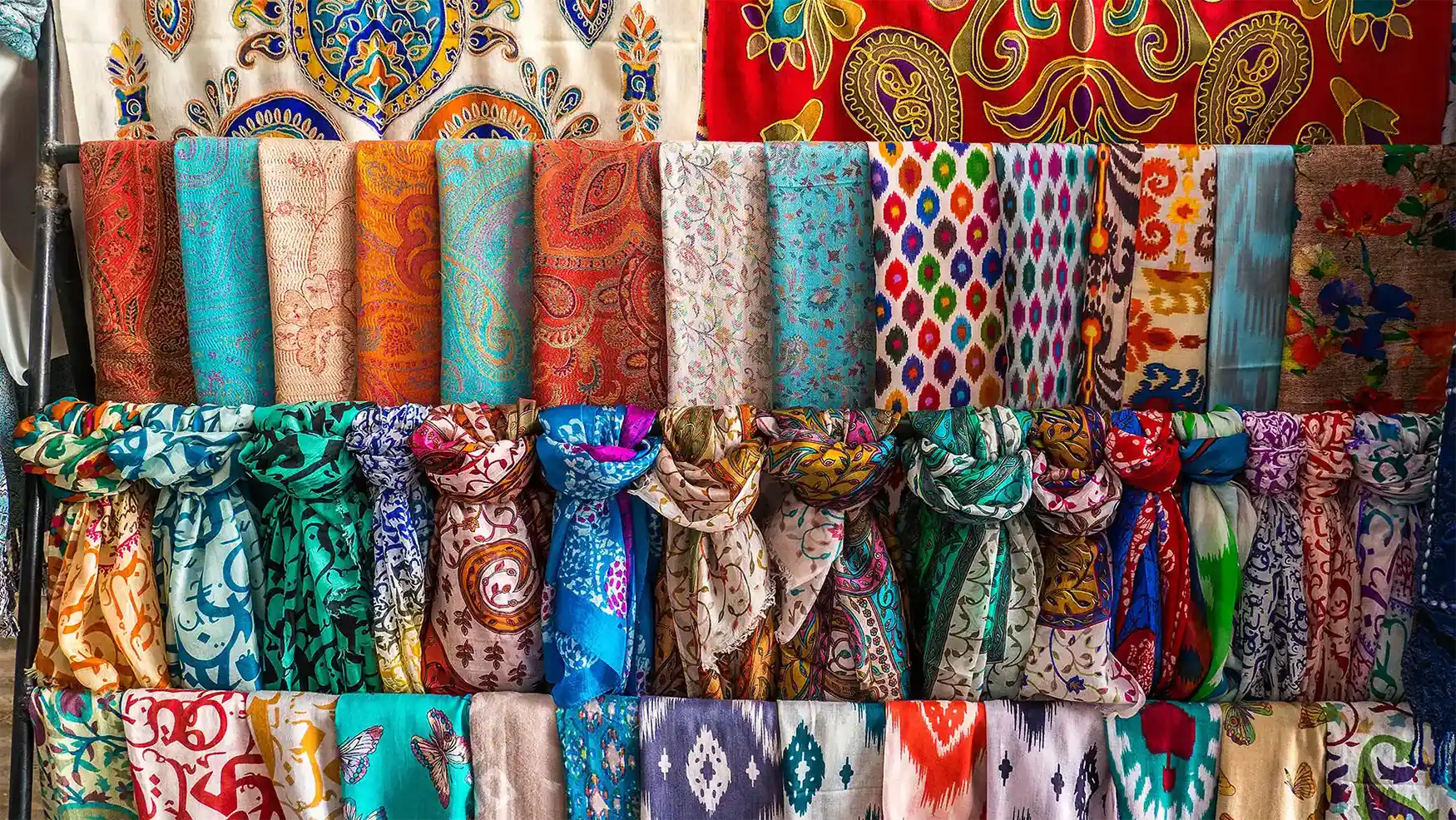
For centuries, Uzbek craftspeople have produced textiles whose patterns and textures became part of the country’s cultural heritage. Every element reflects tradition and the accumulated experience of ancestors. Today, we describe how these unique fabrics are made, from the cotton field to the finished product, and how they are used in national costume.
The fabric-making process begins with cotton, a key resource for Uzbekistan’s textile industry. The hot climate and fertile soil allow cotton to grow in abundance, supplying local artisans and manufacturers with raw material. Harvesting is careful work: the fibres must be selected with precision so that the finished cloth is both strong and soft.

Traditional methods of growing cotton remain widely used in the country. The process carries a simple philosophy: creating something valuable requires labour, affection, and care. Uzbek artisans know that only patience and skill produce the best result.
After harvesting, cotton is processed and spun. Spinning turns cotton fibres into thread, which will form the basis of the future fabric. The work is demanding, yet the strength and durability of the finished product depend on its quality. The thread is twisted by hand on traditional spinning wheels, each of which resembles a work of art with carved details and ornaments.
Next comes weaving, the most exciting stage of production. Uzbek craftswomen use old looms, often operated by pedals, which allow them to control every step. Each line is created by hand, while unique patterns emerge through the artisan’s inspiration and mood. The designs often feature geometric and botanical motifs symbolising harmony and a bond with nature.
Colour is the soul of Uzbek fabric. Traditional dyes are made from plants, flowers, and tree bark. The process has many stages, from gathering raw materials to preparing the pigments. Artisans follow old recipes to create lasting colours that do not fade in sunlight or wash out over time.

This stage gives the fabric particular magic. Dyes create rich, vivid shades that do more than decorate clothing; they express emotion. Red represents energy and passion, blue the endless sky, and green freshness and life.
Once the cloth is ready, it begins its transformation into national dress. Uzbek costumes come in many forms, each associated with a particular region. Traditional dresses and robes, or chapans, are richly embroidered and decorated with patterns symbolising well-being and prosperity.

Every costume is a story told through pattern and material. Its ornaments may include flowers and symbols of water and sun, recalling the importance of nature in Uzbek life. Masters put heart into every detail and use it to transmit the culture and traditions of their land.
Despite technological development, many Uzbek artisans continue to use old methods of textile production. These traditional fabrics have a place not only in folk costume but also in contemporary fashion. Products made from Uzbek textiles are sought after both within Uzbekistan and abroad. At SilkGranat.uz you can find original pieces by leading artisans who continue to preserve the traditions of their craft.
Today, Uzbek fabrics are not merely a tribute to tradition but part of world fashion. Designers draw on their rich history to create distinctive collections. As a result, Uzbek artisans and masters of traditional arts are once again receiving attention worldwide.
Correct care helps Uzbek fabric last and retain its original appearance. Follow these practical recommendations.
Traditional Uzbek fabrics appear not only in clothing but also in interior textiles such as tablecloths, cushions, and bedspreads. They are used to create jewellery, accessories, and other handicrafts that are also available in our shop. Fabric is an essential part of folk art and gives a home warmth and a special atmosphere.
SilkGranat fabrics —are works of art made by artisans who carefully preserve tradition. Learn more about folk art and enter the world of genuine craftsmanship.
Think for a moment: moment: is it not remarkable that one of the most ordinary
Uzbek artisans and masters of traditional arts are once again at the centre of global

Life sometimes feels like an endless list of tasks. Yet add an Uzbek carpet to

You go about your life, work and pass a souvenir shop—and suddenly notice a doll.