


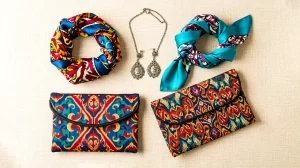
This Uzbek trend has captivated the internet: discover how ikat is changing global fashion and attracting tourists.
Tired of sameness? That familiar feeling in front of the wardrobe. Another morning brings the

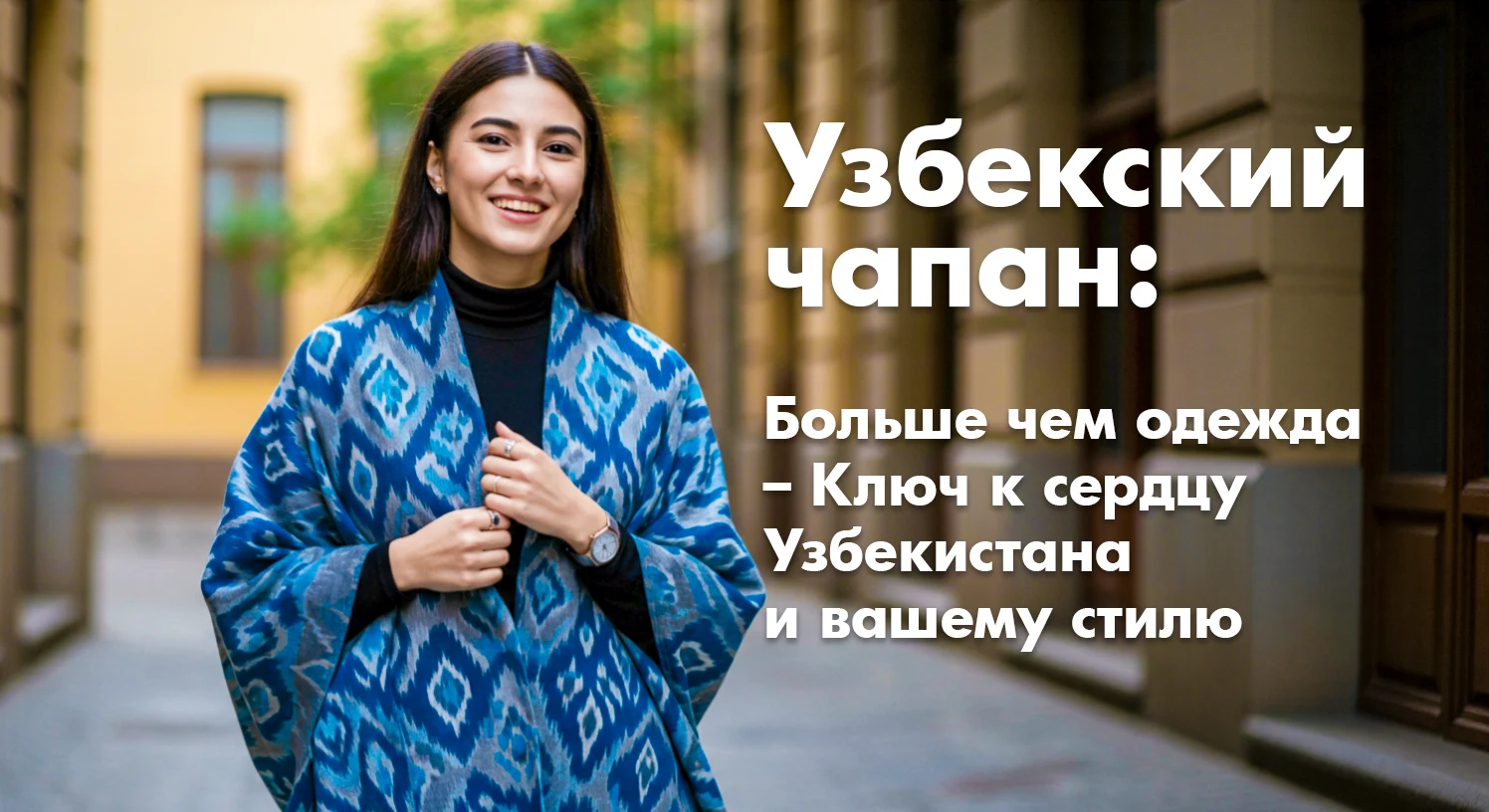
You know how certain things suddenly rise out of everyday life and make you smile? It may be a banknote unexpectedly found in the pocket of an old jacket, or a stranger’s compliment about a scarf you had long forgotten. We live in a world of fast fashion, where trends replace one another at kaleidoscopic speed, leaving behind a slight sense of confusion and piles of nearly identical clothes in the wardrobe. Clothing has become simply… clothing. Functional, certainly. Comfortable, yes. Sometimes even stylish, if you are lucky enough to find something worthwhile in a sale. More often, however, it is sadly anonymous. The modern city dweller’s uniform consists of jeans, T-shirts, hoodies and jackets. Everything is clear, practical and predictable. And, let us be honest, a little dull. It is as though an important colour, a certain spark, is disappearing from life. Deep down, we still long for something genuine, something with history and character—something that does more than shield the body from the wind or curious glances, but carries meaning and tells a silent yet captivating story.
And then, in the midst of this mild longing for something genuine, you plan a journey to distant lands. Or perhaps you simply scroll through friends’ photographs on social media or search for inspiration in travel magazines. Suddenly, your gaze stops on it: the Uzbek robe, the chapan. It may be as bright as the plumage of a bird of paradise or as restrained as a wise aksakal. It is distinctive and utterly unlike familiar silhouettes. Something about it catches you for reasons that are hard to explain. There is ancient magic in it, the warmth of the sun, and a promise of comfort and unhurried days. At once, as if by enchantment, you picture the sunlit lanes of old Bukhara and the copper domes of Samarkand; you seem to smell freshly baked flatbread and strong green tea served in a piala. You want to touch this mysterious culture at once, wander through noisy bazaars and breathe in the spice-scented air of centuries. Naturally, you also want to take a small piece of this Eastern charm home. But what exactly is this robe? Is it only a beautiful exotic souvenir, another garment destined to gather dust in a wardrobe? Or does it conceal something more—a secret of its own?
Let us try to decipher this code and look beyond its bright appearance. The Uzbek robe, or chapan, is indeed far more than an item of clothing. It is an entire layer of culture, a complex pattern woven from history, centuries-old traditions, social markers and deep symbolism. It is no accident that the word ‘chapan’ is linked to the Arabic ‘khil‘at’, meaning an ‘robe of honour’ bestowed by a ruler as a sign of special favour. This sense of honour is present in every detail. For centuries, the chapan was not merely clothing that protected its wearer from heat or cold. It was a visible sign of status and social position, and a living expression of the renowned hospitalityof the East. Receiving a chapan as a gift from a host or a respected person is not simply an exchange of courtesies; it is a sign of profound respect and recognition. The tradition remains alive today, and a chapan given as a present expresses the giver’s esteem more eloquently than words.

Imagine a conversation somewhere in an old craft row, where the air smells of wood and paint:
“My dear sir, I can see that you have a trained eye. This chapan is not for everyone. The silk comes from Margilan and is called bekasam. It is handmade, and every knot remembers the warmth of its maker’s fingers.”
“It is beautiful, certainly. But will it keep me warm? Our winters are harsh.”
“Ah, my dear! A chapan warms the soul first and the body second. It is airy in summer, and in winter—especially when quilted and padded—no frost can trouble you. Most importantly, it brings respect. Put one on and everyone sees that a knowledgeable visitor has arrived, someone who honours the culture.”
There is not the slightest exaggeration in the master’s words. The chapan is remarkably practical and carefully designed. Its loose, straight cut does not restrict movement; it was equally comfortable for sitting on the floor around a dastarkhan and for mounting a horse, which is why side slits were often added. Natural fabrics— silk, cotton and semi-silk adras and bekasam—allow the body to breathe and create a comfortable microclimate. Traditionally there were no buttons. The fronts overlapped, and the waist was tied with a special scarf known as a kiyikcha or belbog, itself often a work of art.
Your curiosity has been sparked, and you have decided to bring home from a journey—or order online—this remarkable artefact, a piece of the Uzbek soul. The mission is possible, but it requires attention. How do you choose the chapan that feels truly yours and becomes not merely a purchase but a trusted companion? What should you notice in this colourful kaleidoscope?
Caring for a To keep your chapan beautiful for many years, remember that it needs proper care. Natural fabrics, especially silk, velvet and ikat, require delicate handling. Professional dry cleaning is usually recommended. If you wash it yourself, do so only by hand in cool water with a mild detergent and never wring it. Dry it flat in the shade. And, of course, course, protect it from moths and the damaging effects of direct sunlight..
Then the moment arrives: the chapan chosen with love and anticipation is yours. You take it out carefully and unfold it. The fabric flows through your hands and the patterns shimmer. You put it on—and the promised magic occurs. The pleasant weight of the natural cloth settles on your shoulders, bringing an unexpected sense of protection and calm. The loose cut surrounds you without restricting movement. Bright or restrained patterns please the eye and lift your mood. You approach the mirror and see… a slightly different version of yourself. Your shoulders seem straighter and your bearing more assured. You feel different. You are no longer merely a tourist who happened to glance into the East, but a welcome guest admitted to a secret and connected with an ancient, wise culture. This robe is not simply an object; it is an artefact, almost a magical cloak carrying you into another world filled with mystery and beauty.


Tired of sameness? That familiar feeling in front of the wardrobe. Another morning brings the

The traditions of silk production in Uzbekistan reach back to deep antiquity, and today these
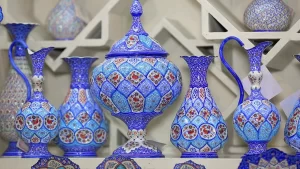
Uzbek artisans and masters of traditional arts are once again at the centre of global

In everyday life, we rarely consider how the beautiful things decorating our homes are made.