
Silk routes: from ancient caravans to the modern craft trails of Uzbekistan
I have always dreamed of journeys where time seems to stop and every stone and


Metal chasing is more than a technique; it is a bridge between centuries. Masters of the past transformed cold metal into a warm story about culture and tradition. Today, the craft is enjoying a revival and bringing the spirit of history into modern interiors. Let us examine why chased metal offers practicality as well as beauty.
Metal chasing arose long before the common era, and traces of it have been found in Egypt, Greece, and Central Asia. Uzbekistan, however, became one of the important centres in the development of this art. From the Timurid period in the fifteenth century, masters worked first with bronze and later with copper and brass, materials that are easier to shape yet remain strong.
Bukhara, Khiva, and Kokand became centres of metal chasing. Masters produced refined objects ranging from household utensils to weapons. Oftoba and kumgan vessels were known for elegant forms, while islimi ornaments displayed complex patterns.
Uzbek masters have always paid close attention to the symbolism of ornaments. Plant and geometric motifs not only decorated objects but also carried sacred meaning. Patterns known as the “nightingale’s eye” or “snake’s trail” symbolised protection and well-being. This approach makes every object distinctive and filled with history.
“Every embossed piece is a conversation between the artisan and the metal, with each line reflecting the artisan’s soul.”
The embossing process has several stages. This step-by-step guide reveals the artisans’ secrets:
Traditional methods are combined with modern technology. Today, masters may use lasers for preliminary marking and electrochemical treatment to give an object additional strength. Handwork nevertheless remains the essential stage that guarantees the individuality of every piece.
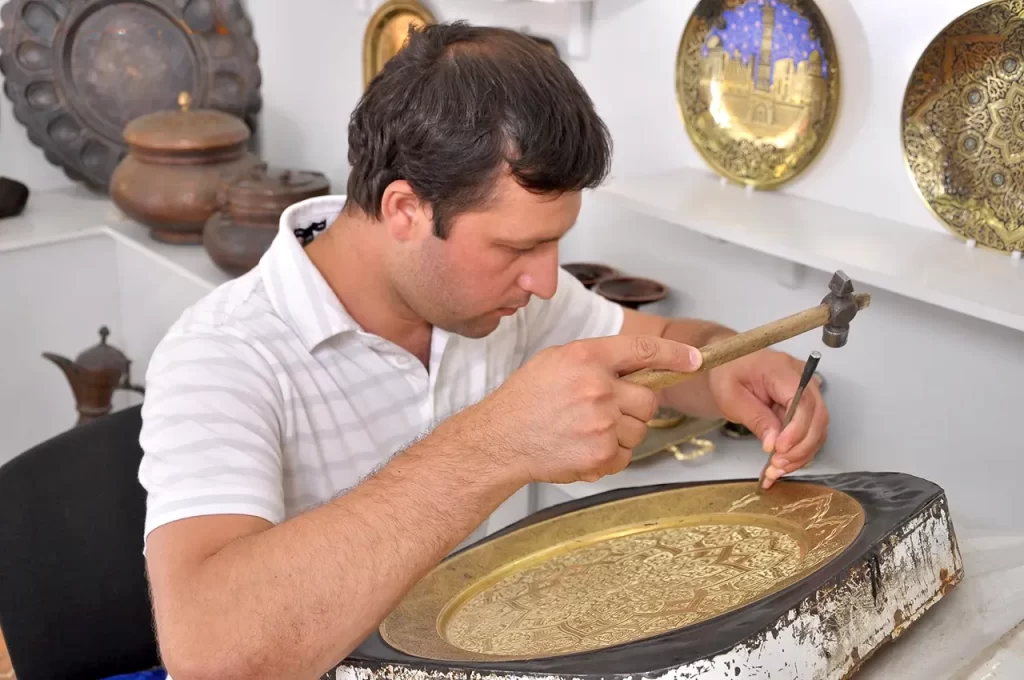
Chased metal tableware is both attractive and practical. Dasthshuy washing basins, for example, keep water cool even on hot days. Traditional choynak teapots retain heat well and preserve the drink’s aroma.
Copper has antibacterial properties. Water stored in copper vessels can become cleaner. Modern research indicates that copper surfaces can destroy up to 99 per cent of certain bacteria within several hours.
Brass and copper objects can last for decades. With correct care, they retain their sheen and shape. Such pieces pass through generations and become family heirlooms.
Every piece carries part of Uzbekistan’s history and traditions. These are not merely household objects but distinctive works of art that fill a home with warmth and comfort.
Follow these simple recommendations to enjoy your pieces for years:
Objects inlaid with semi-precious stones need additional care. Avoid chemicals and clean them with a soft brush.
Metal chasing in Uzbekistan is more than a craft. It passes on knowledge and traditions. Ornaments carry deep symbolism: patterns such as the “nightingale’s eye” and “fish scales”, for example, have protective meanings.
Today, chased metal products decorate homes, restaurants, and offices around the world. They are valued for individuality and their reflection of Uzbek culture.
In an age of globalisation, demand for authentic handcrafted objects is growing. Metal chasing has become a symbol of resistance to mass production and highlights the value of handwork. Many collectors seek unique pieces capable of telling their own stories.

Metal chasing has become increasingly popular in recent years. Decorative panels and tableware suit minimalist and ethnic interiors. Sets of tall jugs and pialas also find a place in fine-dining restaurants.
Designers increasingly use chased metal in contemporary décor. Lamps with chased shades, decorative plates, and even furniture with metal-chased details are appearing in fashionable interiors.
On the website SilkGranat offers original products by Uzbek masters. Explore Kitchenware and Antiques for choosing authentic products. Also take a look at ceramics and Handicrafts.
Artistic metal chasing unites history, aesthetics, and practical value. Every object carries the warmth of its maker’s hands and the spirit of ancient traditions. Give your home individuality by choosing work from Uzbekistan’s leading masters.
Chased metal resembles magical artefacts that come alive in their owners’ hands. These pieces do more than decorate a room; they make it special and fill it with distinctive energy.
I have always dreamed of journeys where time seems to stop and every stone and
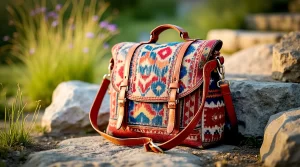
Every morning begins with the search for the right bag—one that can hold everything needed
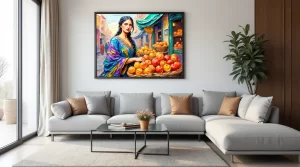
While sitting at home, we often wonder how to make the interior more interesting and
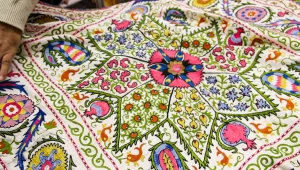
Life is like morning tea in a teahouse: noisy, scented with Eastern spices and certain