
Secrets of silk longevity: how to extend the life of your pieces
Silk is like precious jewellery: valued for its sheen, softness, and elegance. Like any treasure,

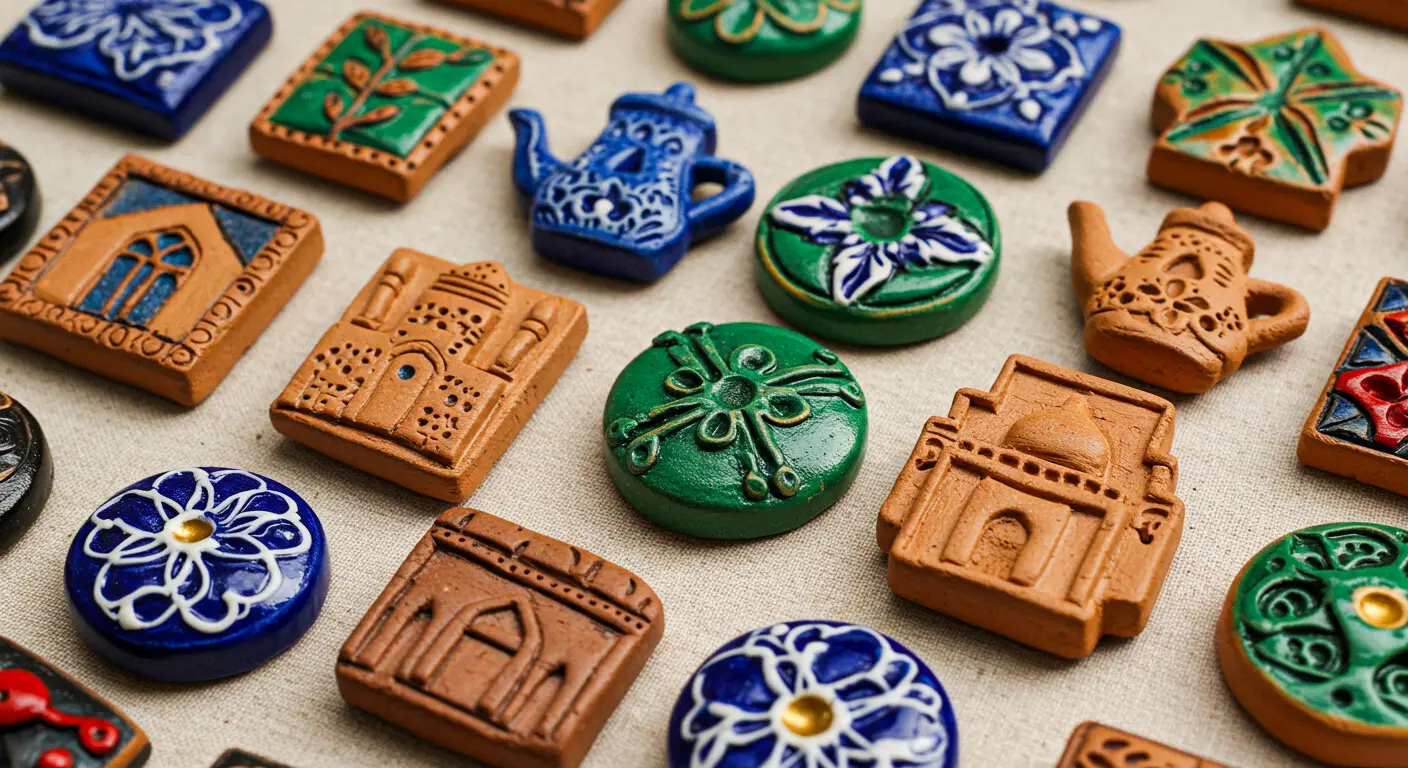
People are curious creatures: we buy a fridge magnet on every journey but can never remember where we put the mug friends brought us as a present. Handmade work is different. Every stitch and every brushstroke carries the warmth of the hands that created it. Add Uzbek ornaments inspired by thousands of years of history, and you have the perfect festive souvenir.
Welcome if you would like to delight someone with a unique handmade gift but do not know where to begin. We will look at small souvenirs with Uzbek motifs that can be made easily at home without decades of professional experience.
The first people to record stories through symbols rather than words were not writers but artisans. Suzani embroidery, ceramics, and wood carving are more than decoration; they form a language that passes knowledge, tradition, and belief to new generations.
A red pomegranate in an ornament symbolises fertility and abundance and recalls the hospitality of the Uzbek people. Blue curls resembling waves represent purity of thought and the pursuit of spiritual growth. Yellow patterns embody the warmth of the sun and joy, while green leaves and shoots signify renewal, nature and life. Traditional designs may also include birds symbolising happiness and freedom, or complex geometric figures expressing the harmony of the world. Those wishing to discover what lies behind these motifs can explore a detailed guide to the hidden symbols of Uzbek ornament.

In every region of Uzbekistan, craftspeople use their own distinctive decorative elements. Rishtan ceramics, for example, are known for vivid blue and turquoise tones, while suzani embroidery preserves hidden wishes of happiness and prosperity. Bukhara patterns found on many objects are rich in golden shades symbolising abundance, while Samarkand masters favour deep, saturated colours in tribute to the region’s great heritage. Fergana ornaments are celebrated for soft, flowing lines and floral motifs that create a sense of refinement. To understand more fully how these ancient ceramic traditions developed over the centuries, one can trace their journey from historical practice to modern design.
Why not take one of these elements and turn it into a unique souvenir? Those who prefer natural materials should explore wooden products, where Uzbek ornaments can appear especially striking. Even a small object with a traditional pattern can become more than decoration: it can preserve warm memories of the East.
What you need: a wooden board, acrylic paints, brushes and varnish.
How to make it:
Result: a miniature panel that can be hung on a wall or placed on a shelf will become a beautiful interior accent.
What you need: air-dry clay, acrylic paints, a brush and a magnetic sheet.
How to make it:
Result: an original souvenir that will take pride of place on the refrigerator.
What you need:
How to make it:
Additional ideas:
Result: A distinctive mug painted in the Uzbek style makes an excellent gift or warm addition to a home and turns every tea gathering into a special ritual.

The first attempt may not be perfect: a line may tremble, colours may mix differently from the plan, and the pattern may be slightly uneven. This is part of the charm of handwork. Every stroke carries something of the maker, making each work unique.
In Uzbekistan, artisans sometimes deliberately leave a small “mistake” in an ornament, following the belief that only God can create perfection. Experienced masters may intentionally alter one element in a pattern to emphasise the human nature of the piece. This is more than a detail; it is a philosophy in which beauty is found in imperfection.
If something does not work the first time, do not worry. Try another approach: use stencils, prepare a sketch on paper or combine different techniques. The most unexpected experiments sometimes lead to remarkable discoveries. Uzbek ceramic painters, for example, tested many ways of applying colour before achieving the recognisable blue shade of Rishtan pottery.
The main thing is not to fear the process. Your first piece may look simple, but with every new detail you will understand the material better, learn the properties of pigments and discover which shades combine most successfully. Making souvenirs is valuable not only for the result but for the activity itself, which brings pleasure, encourages relaxation and offers a break from daily concerns.
Experiment, try something new, and remember that every creative beginning has value. Perfection matters less than the sincerity and heart placed into each object.
By making such souvenirs, you not only decorate your home and bring joy to loved ones but also connect with centuries-old Uzbek craft traditions. Every element of your work will carry the heritage of ancient masters, their love of detail and symbols conveying wishes of happiness and prosperity. Perhaps this interest will grow into something larger. Who knows—within a year you may be displaying your work at a fair or even creating your own ethnic-style collections.
Many contemporary artisans began with simple experiments at home. Uzbek ornaments now inspire interior designers, jewellers, and artists around the world. The internet and social media also make it easy to share work, find like-minded people, and even sell original handmade products.
Try it, and you may be surprised how satisfying it is to create beauty with your own hands. Every pattern, brushstroke and stitch is a step on a journey through ancient traditions, an opportunity to express yourself and share the joy of creativity with others. Work with heart, and your souvenirs will become more than gifts: they will be true family heirlooms preserving the warmth of your hands and the spirit of eastern craftsmanship.
Silk is like precious jewellery: valued for its sheen, softness, and elegance. Like any treasure,

An ordinary breakfast is simple: eggs, coffee, and a little bread. Yet in a restaurant

“Ordinary daily life: a minibus, traffic jams, worries, and the neighbour who always starts drilling
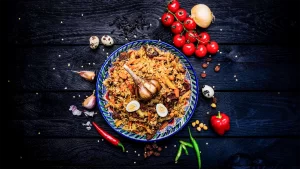
Have you ever tasted plov cooked not simply in a kitchen but with the In