
How handicrafts make Uzbekistan recognisable on the world stage
Have you ever wondered how an ordinary plate or piece of fabric can tell the

Have you ever wondered what magic is hidden in an ordinary wooden spoon or carved column? In Uzbekistan, wood is more than a material; it is a story written by skilled hands. Every object reflects centuries-old traditions passed from master to apprentice like a treasured family recipe.
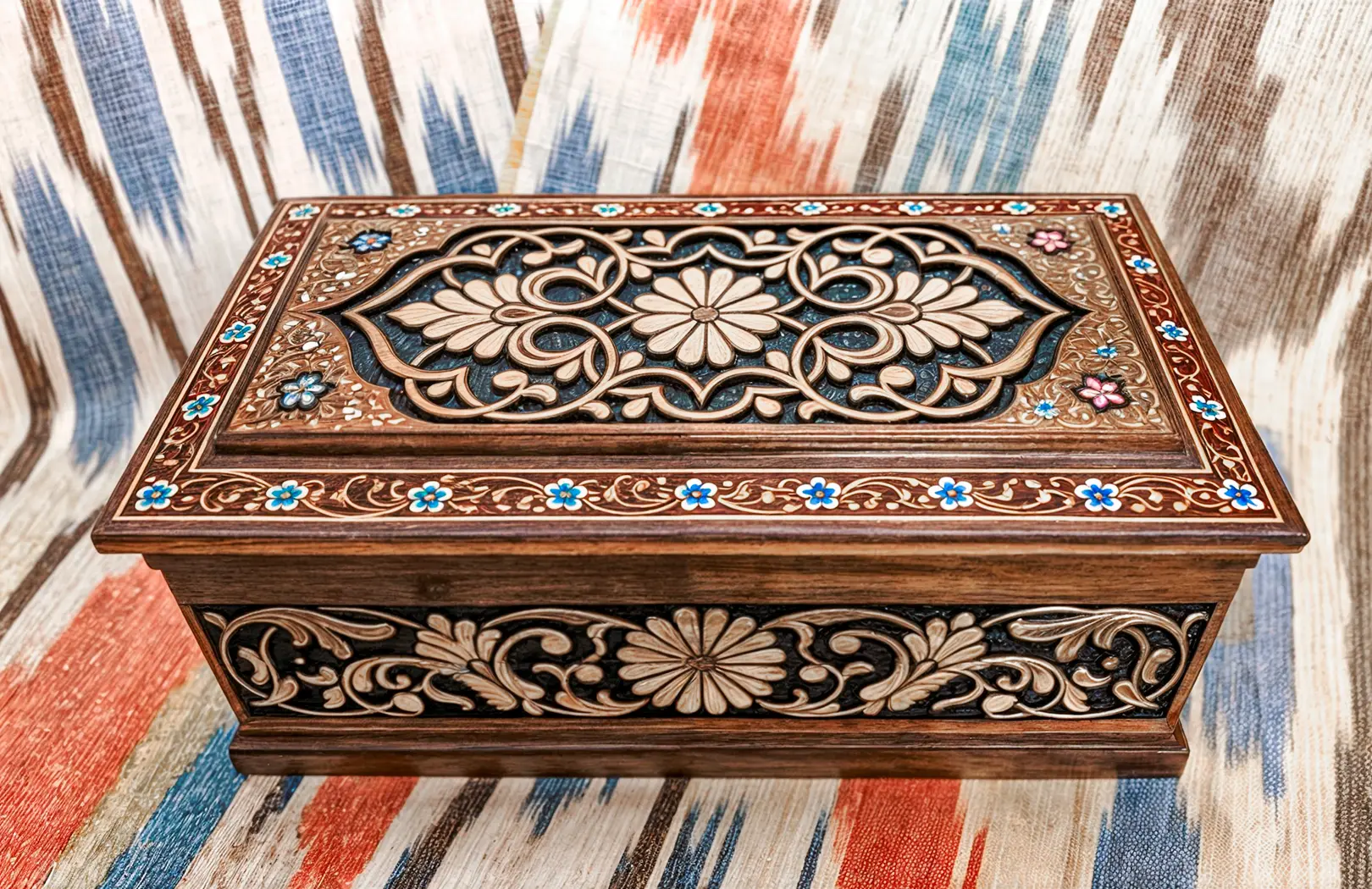
Woodworking in Uzbekistan began more than two thousand years ago, when local craftspeople started using timber not only for daily needs, but also to create genuine works of art. Every object—whether a column in Samarkand or a carved box from Bukhara—tells the story of the maker who placed part of their spirit into it. Such pieces decorated everyday life while reflecting the region’s rich culture, and many became treasured family heirlooms. Carved furniture patterns, for example, were passed from generation to generation and preserved old traditions. Similar works can still be found at craft markets today, where makers draw inspiration from ancient techniques and create unique objects valued by residents and visitors alike.
The feudal era became a true golden age for this craft. In major cities such as Samarkand and Bukhara, palaces were built with magnificent carved columns. Each column displayed the highest level of woodcarving skill and still inspires artisans today. The ornaments decorating these columns also symbolised the richness of the region’s nature, and you can learn about their meaning by visiting the crafts section. These columns not only supported buildings but also became works of art. Their ornaments reflected natural motifs such as grapevines and floral patterns and symbolised harmony and prosperity. They can still be seen today at historic architectural sites. Wood carving required not only skill but also deep knowledge of the symbolism of patterns, making every column unique.
In villages, greater attention was paid to making practical but no less beautiful household objects. One such object was the distinctive Uzbek cradle, the beshik. It remains a symbol of the Uzbek family, representing care, love and the bond between generations. Carving on these cradles included ornaments expressing wishes for a child’s health and well-being. Modern craftspeople continue to draw inspiration from tradition while adding details that make the pieces attractive to collectors. Patterned beshiks can also be found at craft fairs, where they continue to attract the attention of visitors.

Woodworking in Uzbekistan has always been closely linked with a sustainable approach. Craftspeople chose their materials carefully and considered the qualities of the local environment. Walnut, for example, was used for decorative details, while plane wood was chosen for large furniture structures. Carved boxes and book stands can specialised exhibitionsspecialist exhibitions, where they continue to impress visitors with their beauty and durability. Artisans favoured timber available in the region: walnut, plane and poplar. Each species served a particular purpose. Walnut was valued for its strength and ideal grain for fine carving, while plane wood suited larger furniture elements. Boxes and book stands decorated with traditional patterns remain appreciated today for both their appearance and their lasting quality. Craftspeople continue to make them with ancient techniques, turning such objects into genuine works of art that everyone can enjoy.
In Uzbekistan, wood is more than a resource. It is a symbol of life and a link between generations. Carved patterns decorating house façades, doors and interiors reflect the country’s rich culture. These designs often contain complex ornaments that convey not only beauty, but also deep symbolism. They may serve as protective signs for a home, guarding it from harmful influence, while also expressing wishes of well-being and prosperity for the family. Details such as carved doors and window frames create a warm and distinctive atmosphere. Today, these traditional elements appear not only in historic houses, but also in modern design inspired by Uzbekistan’s cultural heritage. Their use is often connected with preserving the past. Examples can be found in museum displays and in the work presented by artisans, including category of unique interior accessories.
Anyone who thinks wooden products are dull has never seen a patterned column come alive in the shade of Bukhara’s madrasas. In Uzbekistan, wood becomes more than material; it acquires a soul.
“Dear artisan, how do you manage to create such unique pieces?”
“The secret is simple. You must love the wood and listen to it. It will tell you which ornament suits it.”
“But how do you know what the customer will like?”
“My job is not to guess, but to make the customer feel connected to the piece. It is like finding an old friend.”

Today, wooden products from Uzbekistan are becoming popular not only among collectors, but also among people who value sustainability, practicality and originality. Wood carving remains one of the region’s most expressive crafts and a vivid reflection of its culture. Local markets offer a broad range of handmade pieces, from small boxes to large furniture elements. These objects do more than decorate a home: they add warmth and comfort. Many visitors to the country try to buy something unique, such as a finely ornamented box or a wooden book stand. Each piece preserves part of the history and skill that make Uzbek woodwork sought after far beyond the country. This heritage also inspires current trends, in which traditional carved details blend naturally with minimalist design suited to modern interiors. Often displayed at fairs and specialist shops, these objects have become symbols of ancient craftsmanship and art. Craft-focused online collections also present examples that highlight both the beauty and the practical value of traditional patterns.
Every piece can be compared to a magical artefact: boxes seem to hide ancient secrets, while book stands appear to have been made to hold the wisdom of centuries. Even the simplest wooden spoon carries warmth and skill. The maker’s spirit can be felt in every carved detail, shaped with particular care and affection. Such objects do more than decorate a home; they become a bond between generations. Finely patterned boxes seem to guard family heirlooms before passing them on to grandchildren. Book stands turn a library into a welcoming corner where every volume has an honoured place. Even a wooden spoon can fill a meal with a sense of warmth and harmony. These pieces are often chosen as gifts to express respect for tradition and to share a small part of Uzbek culture. Today they hold a worthy place not only in local homes, but also in the collections of art lovers around the world.
Have you ever wondered how an ordinary plate or piece of fabric can tell the

Silk is like precious jewellery: valued for its sheen, softness, and elegance. Like any treasure,

In everyday life, we rarely consider how the beautiful things decorating our homes are made.
While sitting at home, we often wonder how to make the interior more interesting and