Artistic embroidery holds a special place among the folk arts of Uzbekistan. Multicoloured cotton, silk, and gold threads decorated national clothing, including robes and tubeteikas, wedding and prayer rugs, horse blankets, bedspreads, curtains, and tapestries.
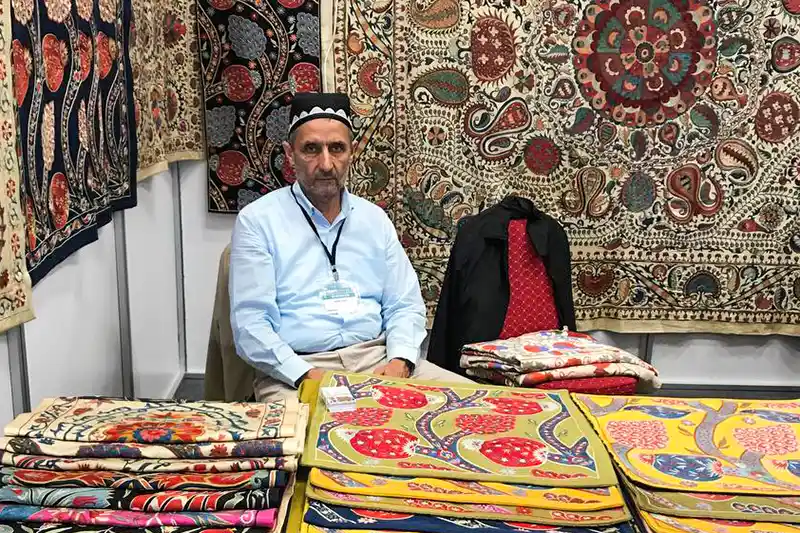
One distinctive form of Uzbek embroidery is the suzani, made on large pieces of silk, velvet or cotton. The word suzani comes from the Persian for “embroidered with a needle”. These large works may reach 2.5–3 metres in length and 2–2.5 metres in width. Producing a suzani can take around eighteen months to two years. Every panel symbolised family traditions and was regarded as a protective object decorating the home.
The main suzani motifs include plants and symbols of nature. Its colours and patterns express wishes for happiness, prosperity and wellbeing. A single work may contain up to fifteen shades, all combined harmoniously. Popular motifs include tulips, irises, leaves and vines, as well as birds, animals and ancient symbols such as the sun and moon.
Making a suzani has two stages: first, a drawing is applied to the fabric, and then embroidery begins. The result is a distinctive work of art equal in expression to carpet weaving.
Suzani is made in several centres across Uzbekistan, including Shakhrisabz, Bukhara, Samarkand, Khiva, Nurata, Urgut, Gijduvan, and the Fergana Valley. Each region has its own recognisable patterns. Pieces from the Fergana Valley, for example, often use dark green or purple backgrounds and feature light, airy ornaments.

Khakim Tadjibaev, a master from Namangan, represents the third generation of an artisan family. For more than twenty years, he has created suzani cushion covers, jackets, chapans, and bags. Around 200 apprentices work in Tadjibaev’s workshop, and the master himself uses only natural silk and natural dyes.
Hakim Tadjibayev sees his mission as restoring traditional techniques and preserving the cultural value of suzani. He revives old methods, remains strictly faithful to authentic practice and makes everything by hand. This gives his work special value, which only increases over time. His pieces are represented in the Tashkent Museum and are exhibited in galleries and fairs around the world.
“I have always practised only this craft. There was never another choice because it is our family work. My grandfather and father did it, then I did, and now my grandchildren do. We want to continue our family business.” — Khakim Tadjibaev.