


Uzbek ceramics: a journey through time from tradition to modernity
“It seems that beautiful plates live in our homes only for guests, while an old

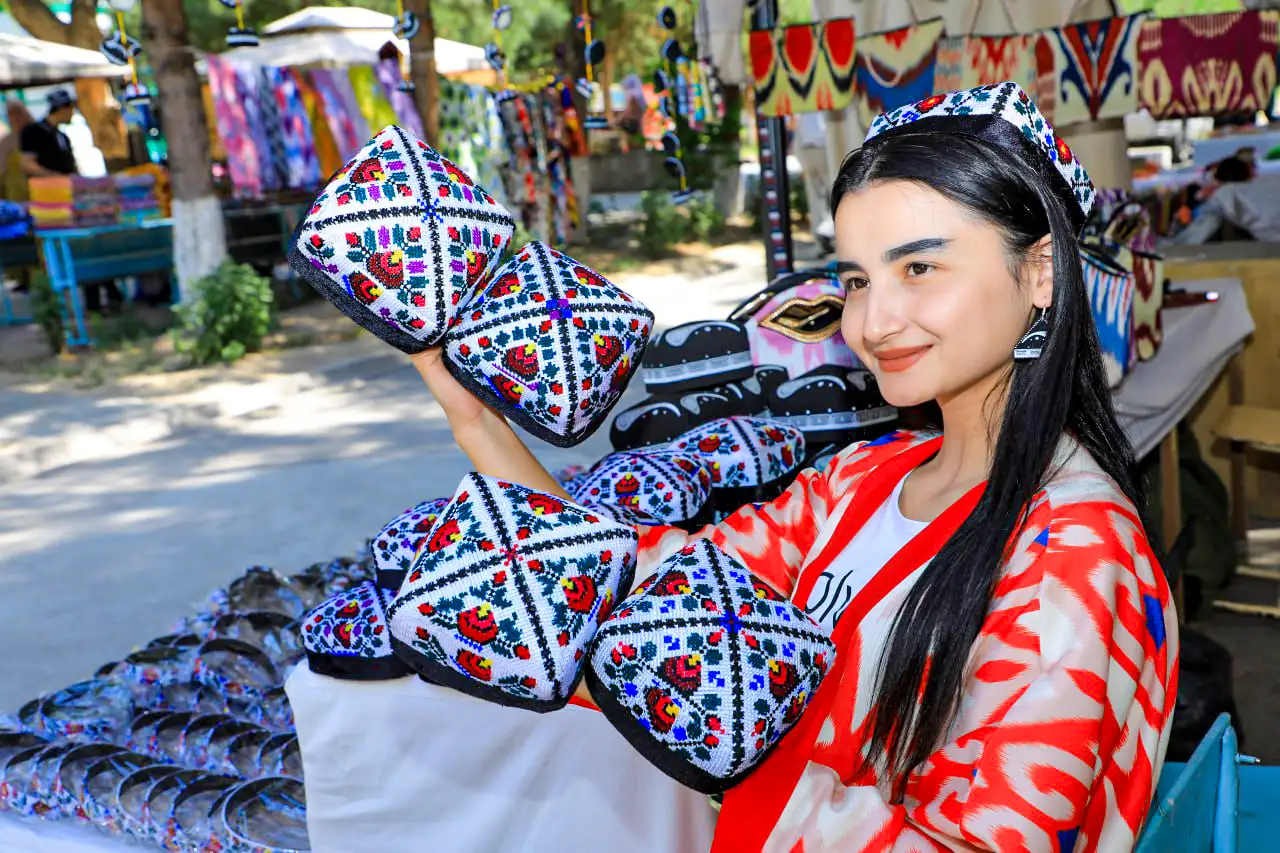
When you arrive in Namangan, where every tubeteika is regarded as a work of art, the special attitude towards these caps becomes immediately clear. Uzbek craftspeople put not only their skill into them, but also their spirit. A tubeteika is more than a headdress: it is a true symbol of culture and tradition that has absorbed the region’s centuries-old history. This is Namangan, where descendants of old masters create works capable of outshining many modern statements of style. Every stitch and every pattern reflects a story rooted in ancient custom. Here, art becomes living heritage passed from one generation to the next. These headdresses are not merely accessories, but cultural artefacts carrying the spirit of an entire people.
Headwear appeared in ancient times, serving not only as protection from sun, wind and cold but also as an important social symbol. Ancient chronicles mention decorated headdresses that indicated membership of a particular tribe or social group. Their patterns are true messages from the past. They preserve ethnic and family symbolspassed down from generation to generation for centuries.

In the Fergana Valley, patterns on tubeteikas may tell complete stories about love, war, or abundant harvests. In some regions of Uzbekistan, embroidery reflected a family’s prosperity and status. Headdresses also often acted as protective charms, with particular patterns and colours believed to guard the wearer from evil spirits.
Production techniques also developed over centuries. At first, masters used only natural materials such as linen and wool. Later, silk threads were introduced, giving pieces additional refinement and durability.

Tubeteikas and other distinctive headdresses are widespread in Uzbekistan, and each tells its own story. Tubeteikas are usually sewn from cotton silk fabric, they are decorated with embroidery whose motifs carry deep symbolic meaning. A tubeteika pattern may include plants, birds and geometric figures reflecting the Turkic roots of the art.
The history of headdress making began in antiquity, when every piece of cloth was selected by hand and embroidery was worked with natural dyes. Traditional makers take pride in the craft and pass production secrets from generation to generation. The use of silk produced in local workshops gives each piece further individuality.
Today, tubeteikas and other ethnic headdresses are sought after by fashion enthusiasts around the world. They are bought not only to complement ethnic notes in an outfit but also as meaningful gifts and symbols of cultural understanding. Modern designers adapt traditional motifs and add details such as decorative stones and unusual fabrics, making these headdresses even more versatile.
One of the keys to preserving headwear is choosing high-quality materials that ensure durability and retain the original beauty. Buyers should check the fabric composition and ask the seller for care instructions. care instructions is to wash by hand or use professional dry cleaning to avoid damaging the embroidery.
It is especially important to avoid harsh cleaning products, which may damage the vivid colours of natural threads. Headwear should also be stored in a dry place protected from direct sunlight and moisture. Embroidery and decorations such as glass beads or metal details can be sensitive to temperature changes, so special fabric covers are best for transport.
Ethnic headwear is more than an accessory; it is an expression of style. It carries us into a world of ancient traditions and reminds us of cultural roots. Designers around the world draw inspiration from its patterns and adapt them for contemporary collections. At fashion shows in Paris and Milan, for example, ethnic motifs appear in accessories recalling Central Asian traditions.
Traditional tubeteikas look harmonious with everyday clothing and add individuality to an outfit. Pair them with light dresses or tailored jackets for a fashionable look. For something bolder, combine a tubeteika with a leather jacket or denim suit. These headdresses are versatile enough to fit into almost any wardrobe.

Every pattern on a tubeteika is more than decoration; it reflects traditional symbols. Floral motifs may represent prosperity, while geometric forms can signify harmony and order. This makes the headdress both a stylish accessory and a bearer of special meaning valued around the world.
Ethnic motifs become more popular every year. Today, tubeteikas can be seen on international catwalks and at fashion shows. Brands such as Dior and Gucci increasingly integrate ethnic details into their collections, confirming growing interest in tradition. These headdresses fit even the boldest looks, joining past and present. Models may, for example, pair a classic dress with a bright tubeteika to create a contrast between old and new styles.
Pieces with vivid embroidery and unusual colours are especially popular because they emphasise individuality. Complex designs such as anor, the pomegranate, and geometric motifs attract attention at fashion events. Contemporary designers also develop unique collaborations with Uzbek artisans to preserve authenticity while bringing a fresh perspective to the design.
“It seems that beautiful plates live in our homes only for guests, while an old

“Lost your earrings again?” asked her husband, trying to hide his surprise. Did you know

You go about your life, work and pass a souvenir shop—and suddenly notice a doll.
At first glance, tea may seem like an ordinary drink consumed every day. In Uzbekistan,